
BOOKS
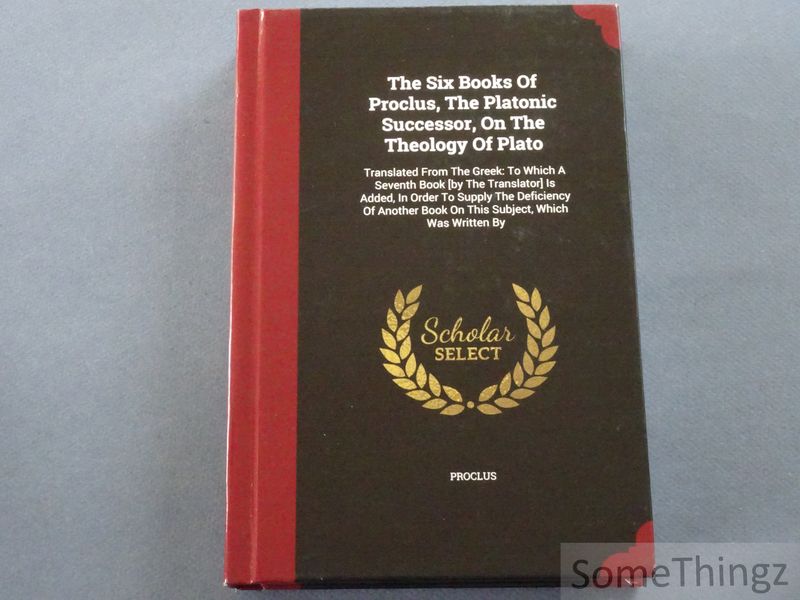

Proclus [Diadochus] / Thomas Taylor.
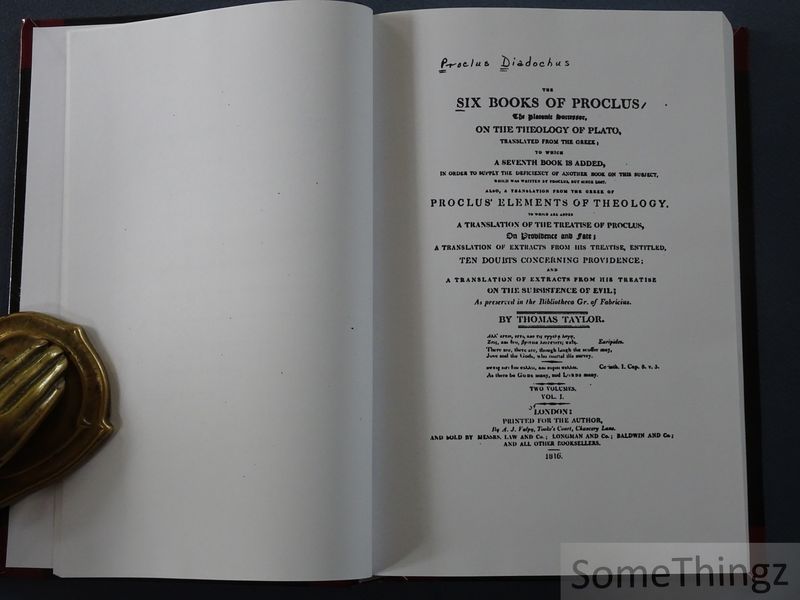
The Six Books of Proclus the Platonic Successor On The Theology of Plato translated from the Greek to which A Seventh Book is Added in order to supply the deficiency of another book on this subject, which was written by Proclus, but since lost. Also, a translation from the Greek of Proclus' Elements of Theology by Thomas Taylor. [Photographic reprint of the London 1816 edition.]
USA, Scolar Select, no date (ca 2015). 9781297842276.

€ 29.50
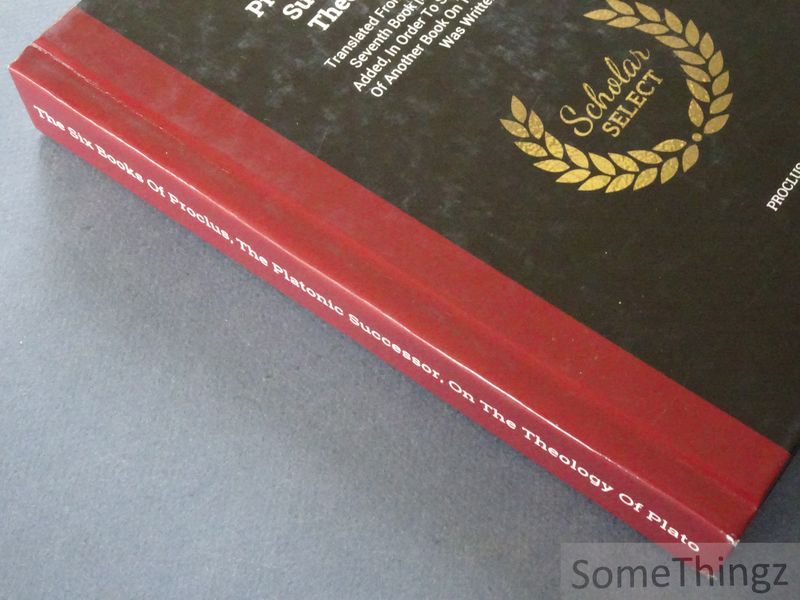
Hardcover, lxxx+425pp., 16.5x24cm., in good condition (binding with light traces of use). ISBN: 9781297842276. "Photographic reprint of the London 1816 edition".
Itemnummer 21800 
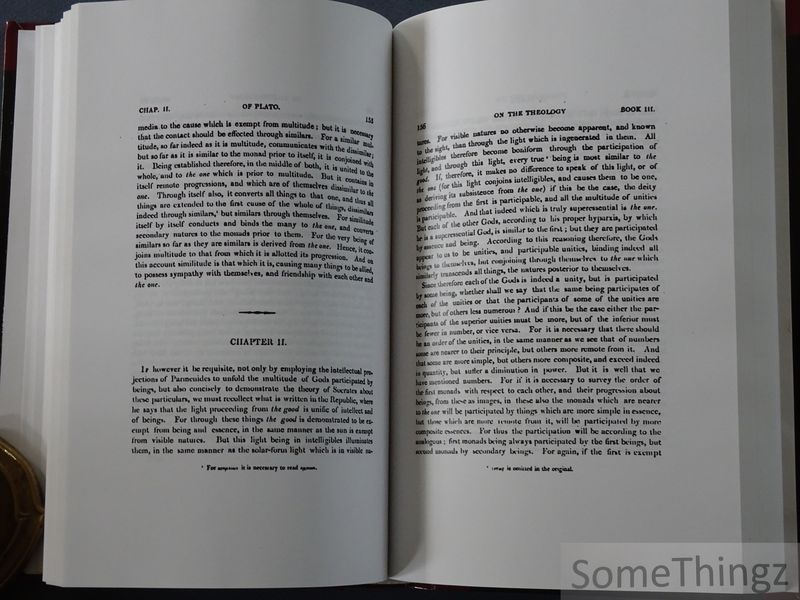
Photographic reprint of the London 1816 edition; an authorized reprint of the original edition, produced by Microfilm-Xerography by University Microfilms, Ann Arbor, Michigan, 1967. The Six Books of Proclus, the Platonic Successor, on the Theology of Plato brings together Thomas Taylor's influential English translations of several major works by Proclus, the great fifth-century representative of Athenian Neoplatonism. The principal work presents an extensive interpretation of Platonic theology, while the volume also contains the important Elements of Theology and additional writings on providence, fate and the problem of evil. A distinctive feature of the edition is the seventh book added by Taylor himself. Proclus' original seventh book on this subject had been lost, and Taylor attempted to supply the deficiency through his own reconstruction. The volume therefore combines Proclus' surviving philosophical writings with an important contribution by one of the earliest major English translators of Neoplatonic philosophy. The central Theology of Plato develops a comprehensive Neoplatonic interpretation of Plato's theology. Proclus examines the One, the divine orders, intelligible reality, intellect, soul and the procession of being from the highest principle towards the sensible world. His highly systematic approach seeks to demonstrate the underlying unity of Platonic metaphysics and theology. The Elements of Theology is one of Proclus' most influential philosophical works. In a tightly structured series of propositions and demonstrations, it sets out the fundamental principles of his metaphysical system, including unity and multiplicity, causation, procession and return, the hierarchy of being and the relationship between intelligible and sensible reality. The volume is further enriched by Taylor's translations of On Providence and Fate, extracts from Ten Doubts Concerning Providence and extracts from On the Subsistence of Evil. These texts broaden the philosophical scope of the book to include questions concerning divine providence, necessity, human freedom, destiny and the origin and nature of evil. The historical importance of the volume lies not only in Proclus' philosophy but also in Thomas Taylor's role in transmitting Greek philosophy to an English readership. The original London edition of 1816 was published in two volumes and is regarded as one of the significant and comparatively rare achievements of Taylor's career. The present photographic reprint preserves that nineteenth-century translation rather than replacing it with a modern English version. For students and collectors of ancient philosophy, Neoplatonism, Platonic theology, metaphysics and the history of Western esoteric thought, this is an unusually substantial English-language edition. Its combination of the Theology of Plato, Elements of Theology and the shorter theological treatises makes it particularly valuable as a single-volume introduction to the philosophical system of Proclus. Proclus (c. 412-485) was one of the most important philosophers of late antiquity and the leading representative of the Athenian school of Neoplatonism. He became head of Plato's Academy in Athens and developed an elaborate metaphysical system drawing on Plato and earlier Neoplatonic thinkers. Thomas Taylor (1758-1835) was an English philosopher, mathematician and translator whose life's work was devoted largely to Plato, Aristotle and the later Neoplatonists. His translations played an important role in the revival of interest in Platonic and Neoplatonic philosophy in Britain. His translation of Proclus' works was first published in London in 1816. (AI-generated content description)