
BOOKS
Fran Levstik / Hinko Smrekar (ills.)
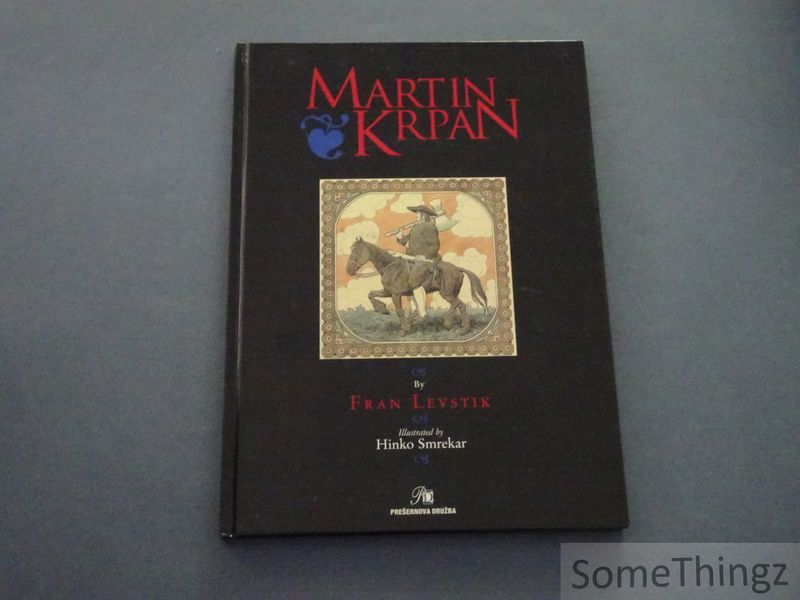
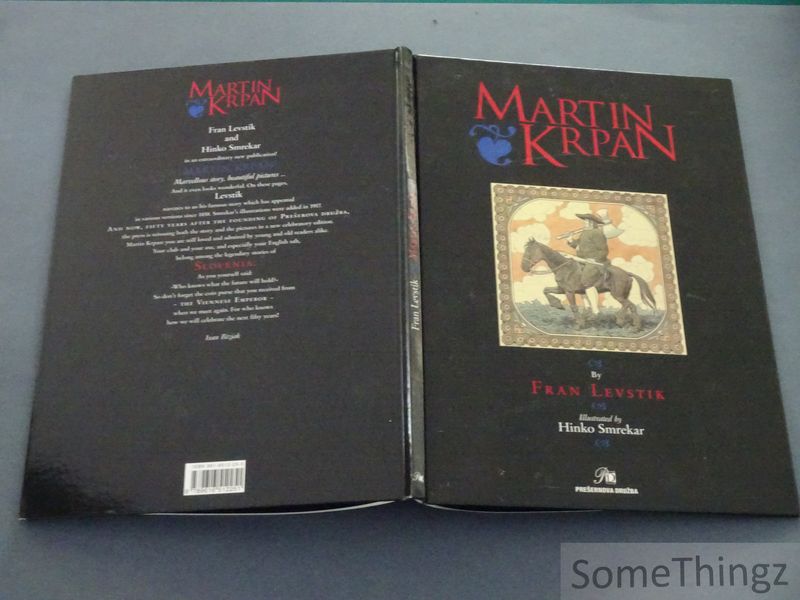
Martin Krpan.
Ljubljana, Presernova druzba, 2004.

€ 17.50
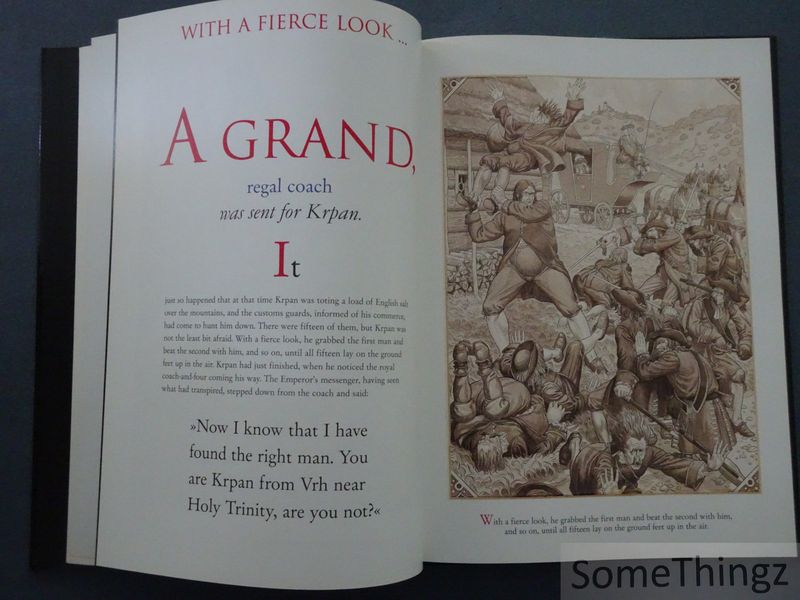
Hardcover, 50 non-numb. pp., 24x32.5cm., ills. in sephia, in good condition (binding with light traces of use, interior fine) .
Itemnummer 21576 
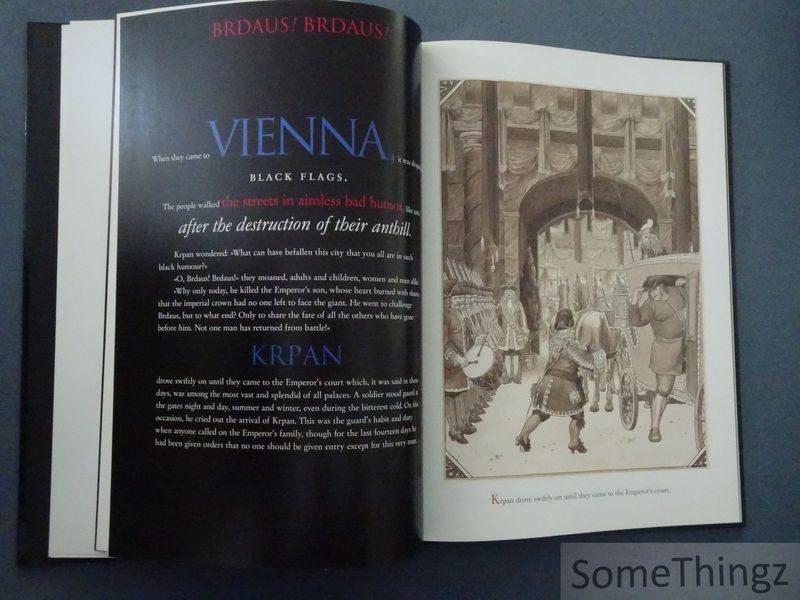
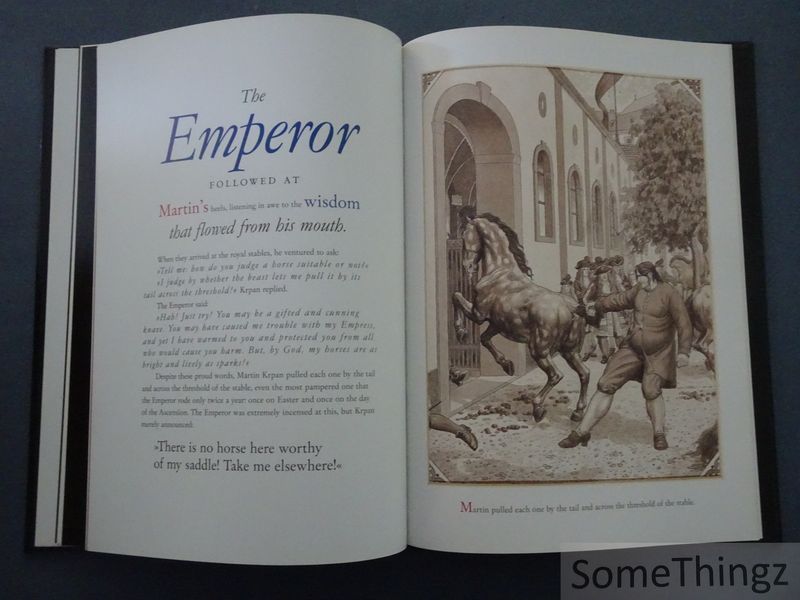
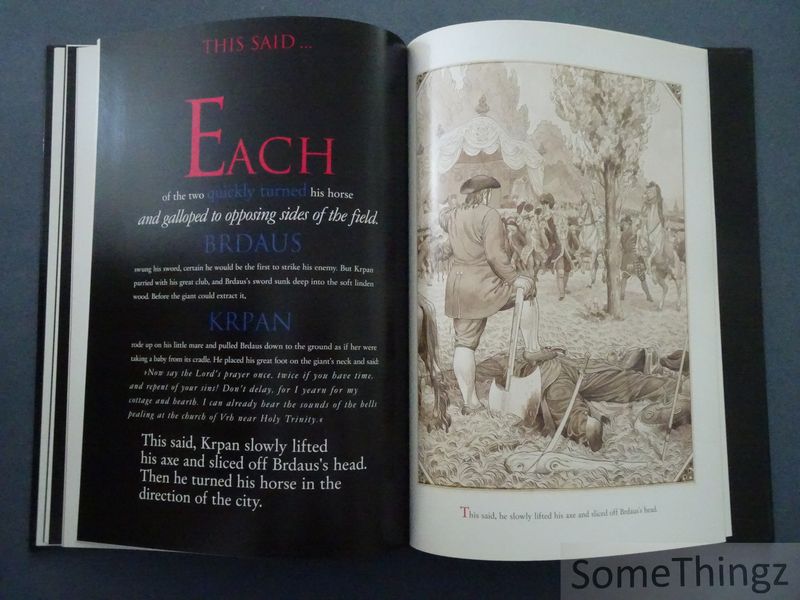
Martin Krpan is the English-language edition of Fran Levstik's famous Slovenian folk-inspired tale, originally published in Slovenian in 1858. The story centres on Martin Krpan, a physically formidable inhabitant of Inner Carniola who makes a living by smuggling English salt. His strength and resourcefulness eventually bring him to the attention of the emperor. When the capital is threatened by the fearsome warrior Brdav, Krpan is summoned to Vienna to confront him. His victory transforms the seemingly rough provincial smuggler into a celebrated national hero. The story combines adventure, humour and satire with themes of independence, resourcefulness, social hierarchy and Slovenian national identity. A particularly important feature of this edition is its use of the celebrated illustrations by Hinko Smrekar. Smrekar created twelve pen-and-ink illustrations for Levstik's story in 1917, together with the original coloured cover. His expressive drawings are regarded as landmarks of Slovenian illustration, combining narrative force, caricature and social satire. The 1917 illustrated version is considered the first Slovenian picture book, giving Smrekar's contribution an important place in the history of Slovenian graphic art and book illustration. This English edition therefore offers international readers access to one of the best-known works of Slovenian literature while preserving the visual heritage of Smrekar's celebrated illustrations. Fran Levstik (1831-1887) was one of the most important Slovenian writers, journalists and cultural figures of the nineteenth century. Martin Krpan z Vrha was first published in 1858 and became one of the central works of Slovenian literature and folklore. Hinko Smrekar (1883-1942) was a Slovenian painter, graphic artist, caricaturist and illustrator. His work is characterised by expressive drawing, irony and social satire. His 1917 illustrations for Martin Krpan occupy a particularly important position in Slovenian illustration history. (AI-generated content description)