
BOOKS
Dirix, Theo.
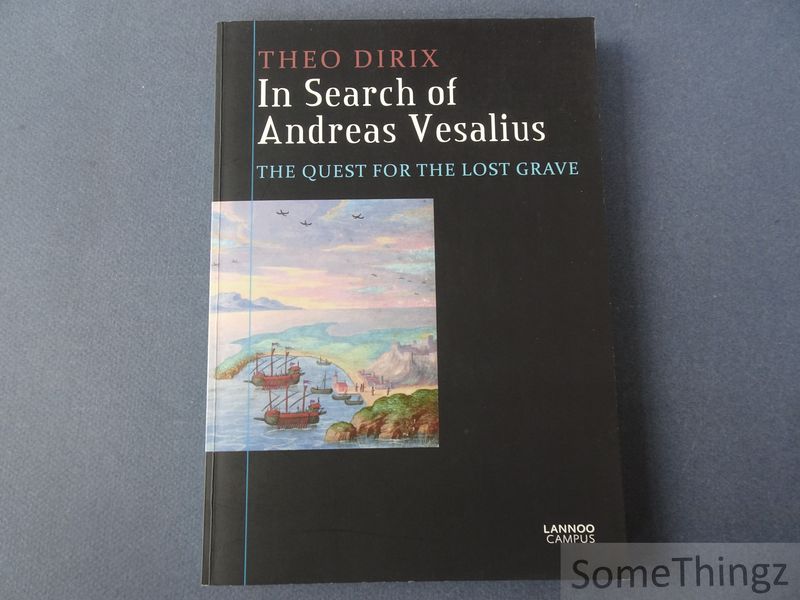
In search of Andreas Vesalius : the quest for the lost grave.
Tielt, LannooCampus, 2014.
Sold
Softcover, 159pp., 17x24cm., ills. in col. and b/w., in very good condition. ISBN: 9789401421386.
Itemnummer 19892 
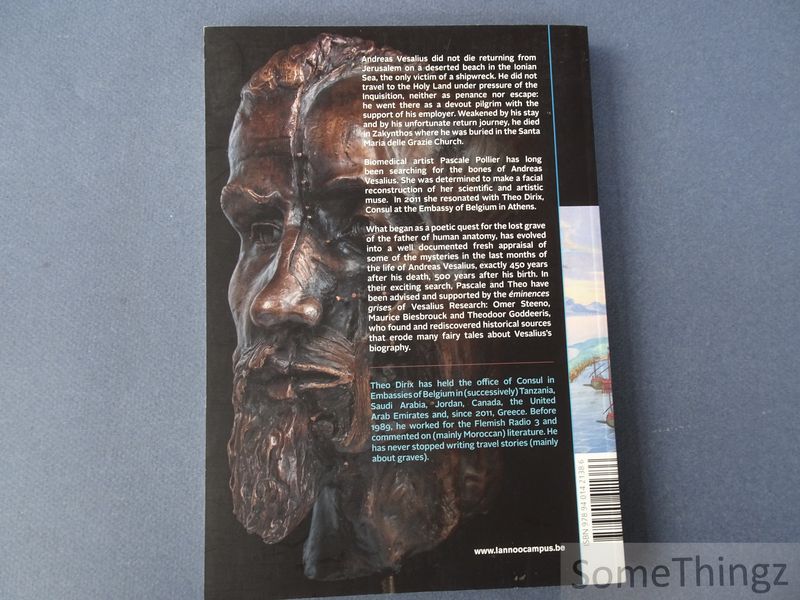
Andreas Vesalius did not die returning from Jerusalem on a deserted beach in the Ionian Sea, the only victim of a shipwreck. He did not travel to the Holy Land under pressure of the Inquisition, neither as penance nor as escape: he went there as a devout pilgrim with the support of his employer. Weakened by his stay and by his unfortunate return journey, he died in Zakynthos where he was buried in the Santa Maria delle Grazie Church. Biomedical artist Pascale Pollier has long been searching for the bones of Andreas Vesalius and was determined to make a facial reconstruction of her scientific and artistic muse. In 2011 she resonated with Theo Dirix, Consul at the Embassy of Belgium in Athens. What began as a poetic quest for the lost grave of the father of human anatomy has evolved into a well-documented fresh appraisal of some of the mysteries in the last months of the life of Andreas Vesalius, exactly 450 years after his death and 500 years after his birth. In their exciting search, Pascale and Theo were advised and supported by the eminences grises of Vesalius Research who found and rediscovered historical sources that erode many fairytales about Vesalius?s biography. In Search of Andreas Vesalius : The Quest for the Lost Grave narrates the compelling and meticulous search for the final resting place of Andreas Vesalius, the influential sixteenth-century anatomist often considered the father of modern human anatomy, by weaving together historical investigation with personal exploration of forgotten archives and rediscovered sources; the narrative begins by challenging popular myths about Vesalius?s death after a pilgrimage to Jerusalem and clarifies the historical circumstances leading to his burial in Zakynthos, then follows biomedical artist Pascale Pollier?s long-standing effort to locate his remains and create a facial reconstruction, a project that brought her into collaboration with the author, Theo Dirix, who at the time served as Consul of Belgium in Athens, and under the guidance of distinguished Vesalius researchers they reappraise key episodes from his last months, contextualizing his life within broader Renaissance science while illuminating lesser known facets of his biography and the myths that have accreted around it over five centuries, ultimately offering readers a richly documented and engaging account of a quest that intersects travel, scholarly detective work, biography and cultural history.